What We Treat › Surgery Recovery
Pre & Post-Surgical IV Support · Scottsdale AZ

Heal Faster.
Surgery Recovery Starts the Day Before.

Surgical recovery is a nutritional event as much as a medical one. The surgical stress response consumes enormous quantities of Vitamin C, zinc, B vitamins, and protein for tissue repair — while anesthesia, fasting, and post-operative nausea make oral nutrition inadequate. Pre-surgical nutrient loading and post-surgical IV support address the physiological requirements of healing at the cellular level, accelerating recovery and reducing complication risk.

10xVitamin C requirement increase during surgical stress
ZincRequired for every stage of wound healing — deficiency doubles healing time
Pre & PostLoading nutrients before surgery improves post-operative outcomes measurably
Surgical recovery support checklist:
  • Upcoming elective surgery (within 1–2 weeks)
  • Slow wound healing or swelling post-surgery
  • Post-operative nausea or dehydration
  • Fatigue and weakness following surgery
  • Cosmetic surgery recovery (swelling, bruising)
  • Post-anesthesia fog or cognitive symptoms
  • Inadequate appetite or nutrition post-op
High-Dose Vitamin C Zinc Glutathione IV Hydration

Why Surgery Depletes Your Body

The surgical stress response is one of the most metabolically demanding states the human body experiences. Understanding what surgery consumes explains why IV nutritional support accelerates recovery.

💉
Vitamin C: The wound healing essentialVitamin C is required for collagen synthesis — the primary structural protein in healing wounds. Surgical stress increases Vitamin C requirements by 5–10x above baseline. Post-surgical Vitamin C levels drop precipitously. High-dose IV Vitamin C before and after surgery maintains the supply needed for collagen production, immune defense, and tissue repair throughout the critical healing window.
💦
Zinc: Cell division and repairZinc is required for cell proliferation — the fundamental process underlying wound healing. Every step from inflammatory phase through tissue remodeling requires zinc. Zinc deficiency, which is surprisingly common, doubles wound healing time and significantly increases infection risk. Zinc depletion accelerates during surgical stress — the period of highest demand.
💧
Glutathione: Oxidative stress managementSurgical tissue trauma generates significant oxidative stress — free radicals produced by ischemia-reperfusion during the procedure and inflammatory response afterward. Glutathione is the primary intracellular antioxidant neutralizing this oxidative burden. IV glutathione supports tissue repair by maintaining the cellular antioxidant environment that healing requires.
Dehydration from fasting and anesthesiaPre-operative fasting, anesthesia effects on fluid balance, and post-operative nausea combine to produce significant dehydration after most surgeries. Dehydration impairs tissue perfusion, slows drug clearance, reduces cognitive function, and delays the return to normal oral intake. IV hydration post-operatively restores fluid balance faster than oral rehydration during the post-anesthesia recovery period.
🧠
Post-anesthesia cognitive effectsGeneral anesthesia produces a post-operative cognitive syndrome in many patients — characterized by confusion, memory impairment, and cognitive fogginess that can persist for days to weeks. NAD+ and B-vitamin support following anesthesia addresses the cellular energy deficits and neurotransmitter disruption that underlie this syndrome, particularly in older patients.
💔
Iron losses from surgical bleedingBlood loss during surgery depletes iron reserves. Surgical patients with pre-existing borderline iron stores may become frankly iron-deficient following a procedure with significant blood loss. Post-operative fatigue and prolonged recovery are frequently iron-deficiency related — and IV iron correction is more rapid and reliable than oral iron during the recovery period when GI function may be compromised.

Viva Surgical Recovery Protocols

Pre-surgical nutrient loading and post-surgical support designed around the specific physiological demands of the healing process.

Post-Op Hydration
Recovery Rehydration IV
See IV Menu

For post-operative dehydration, nausea, and early fatigue. IV fluids, electrolytes, anti-nausea support (Zofran), and targeted nutrients delivered directly when oral intake is limited or unavailable. Schedule within 24–48 hours post-discharge.

  • Rapid post-anesthesia rehydration
  • Electrolyte replacement for fluid balance
  • Zofran ($30) for post-op nausea
  • Vitamin C for early wound healing support
View IV Menu →
Iron Restoration
Iron IV Therapy
Physician Consultation Required

For patients with significant surgical blood loss or pre-existing borderline iron stores. IV iron corrects post-surgical iron deficiency faster than oral supplementation — accelerating hemoglobin recovery and restoring energy during the recovery period.

  • Addresses post-surgical blood loss
  • Faster hemoglobin recovery than oral iron
  • Physician-ordered based on post-op labs
  • Particularly valuable for major surgical procedures
View Iron IV →
Cognitive Recovery
NAD+ IV Therapy
From $200

For patients experiencing post-anesthesia cognitive effects or prolonged post-surgical fatigue. NAD+ supports neuronal energy recovery, DNA repair, and the mitochondrial function underlying cognitive clarity — accelerating return to normal cognitive performance after anesthesia.

  • Addresses post-anesthesia cognitive syndrome
  • Neuronal energy recovery support
  • Mitochondrial repair post-surgical stress
  • 250mg ($200) to 1000mg ($700)
View NAD+ →

Surgical Support Timeline

1–2 Weeks Before Surgery
Optimization & Nutrient Assessment
Physician review of your nutritional status — particularly iron, Vitamin C, zinc, and protein. Identify and correct deficiencies before surgery when there is time to do so adequately. Address iron deficiency before elective procedures where possible to avoid post-operative anemia.
24–72 Hours Before Surgery
Pre-Op Nutrient Loading IV
High-dose Vitamin C, zinc, glutathione, and B-complex. Saturates tissue stores immediately before the surgical demand. Coordinates with your surgeon's pre-operative restrictions — IV administration avoids any conflict with oral fasting requirements.
Day 1–3 Post-Surgery
Rehydration & Nausea Recovery IV
Once cleared by your surgical team for outpatient activity, IV rehydration, electrolytes, anti-nausea support, and early wound-healing nutrients. Most cosmetic surgery patients schedule this for day 1–2 post-discharge to address swelling, nausea, and the dehydration from fasting and anesthesia.
Week 2–4 Post-Surgery
Ongoing Healing Support
Weekly or bi-weekly sessions through the active healing phase — Vitamin C and zinc to sustain collagen synthesis, glutathione to manage oxidative stress, NAD+ for cellular energy if fatigue is significant. Protocol intensity tapers as you return to normal oral nutrition and activity.
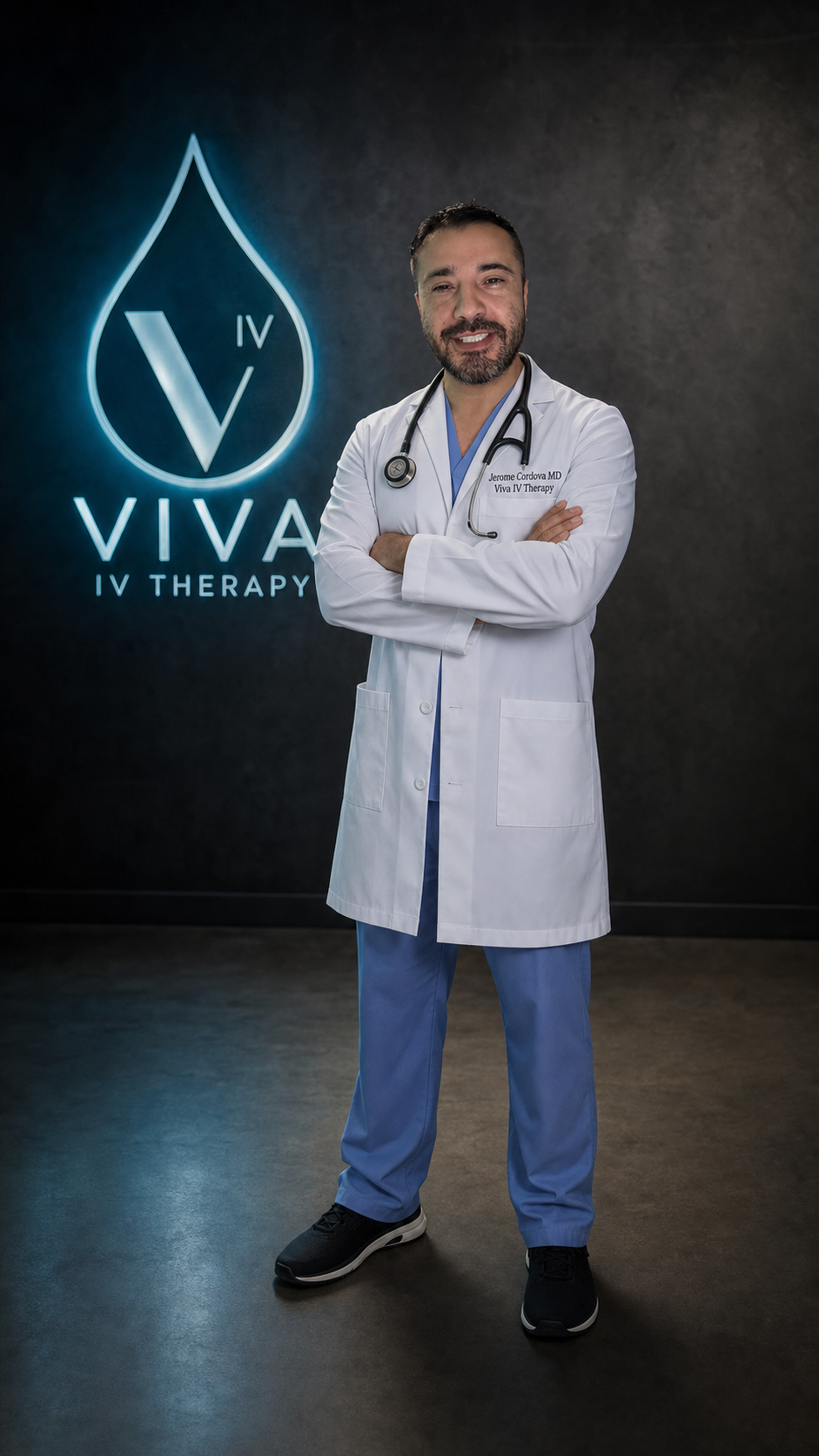
Dr. Jerome Cordova MD
Medical Director & Founder
Dr. Jerome Cordova, MD
Critical Care Physician · Biomedical Engineer · Founded Viva IV Therapy 2017 · Old Town Scottsdale

"In critical care, we know that nutritional status going into surgery is one of the strongest predictors of outcome. A malnourished patient has dramatically higher rates of wound complications, infection, and prolonged recovery. The same principle applies to elective surgery — a patient who has optimized their Vitamin C, zinc, and iron before a procedure heals faster and has fewer complications. It's one of the most evidence-based things we can do, and it's almost never recommended in outpatient surgical preparation."

Surgery Recovery FAQ

Yes — always inform your surgical team of any treatments, supplements, or medications you are taking. High-dose Vitamin C and zinc are generally considered safe and well-tolerated in the peri-operative period, but your surgical team should be aware. Some supplements (not our IV protocols) have effects on bleeding time and should be paused before surgery. We can coordinate with your surgeon if needed.
Yes — post-cosmetic surgery IV support is one of our most common use cases. Many cosmetic surgery patients in Scottsdale come in for post-op rehydration, Zofran for anesthesia-related nausea, Vitamin C and zinc to accelerate wound healing, and glutathione to reduce oxidative stress and support faster resolution of bruising and swelling. Schedule within 24–48 hours post-discharge for best results.
Once your surgical team clears you for outpatient activity — typically day 1–3 post-discharge for outpatient procedures. For inpatient procedures, we work around your discharge timeline. The earlier in recovery, the more impact the IV support has — particularly for hydration, nausea management, and early wound healing support. Contact us as soon as you know your discharge date and we can schedule accordingly.

Also Explore

Recover Faster. Start the Day Before.

Pre-surgical nutrient loading and post-op IV support. Designed around the physiology of healing. Schedule before your procedure for best outcomes.

(480) 508-8482

Open Daily · 10:00 AM – 7:00 PM · 7320 E. 6th Ave, Old Town Scottsdale