What We Treat › Skin Health & Radiance
Physician-Directed Care · Scottsdale AZ

Your Skin Reflects What's Inside.

Dull, aging skin isn't just a surface problem — it reflects what's happening at the cellular level. Glutathione depletion, collagen decline, oxidative stress, dehydration, and nutritional deficiency all show up in your skin before they show up anywhere else. We address the internal drivers of skin aging and radiance with physician-directed IV protocols.

1%Annual collagen loss after age 20
100xHigher vitamin C from IV vs. oral supplements
9 yrsPhysician-directed IV therapy in Scottsdale
Are you experiencing any of these?
  • Skin looks dull, uneven, or lackluster
  • Dark spots or hyperpigmentation
  • Fine lines and reduced elasticity
  • Dry, dehydrated skin despite topical products
  • Acne or chronic skin inflammation
  • Skin aging faster than expected for your age
  • Redness or reactive skin
Glutathione Depletion Oxidative Stress Collagen Decline Dehydration

What Your Skin Is Telling You

Skin is the body's largest organ and one of the most metabolically active. The visible signs of skin aging are outputs of internal biochemical states — and addressing those states changes what you see in the mirror.

Dullness & uneven toneOxidative stress damages skin cells and disrupts melanin regulation, producing uneven pigmentation and a lackluster complexion. Glutathione inhibits tyrosinase — the enzyme responsible for melanin production — brightening tone from within.
🕸️
Fine lines & loss of firmnessCollagen synthesis requires vitamin C as a cofactor — without it, collagen production slows regardless of diet. UV damage, oxidative stress, and declining hormones all accelerate the collagen breakdown that produces fine lines and sagging.
💧
Chronic drynessSkin dehydration is often internal rather than topical — cells that lack adequate hydration at the cellular level cannot maintain the moisture barrier that topical creams attempt to supplement from the outside.
🌋
Inflammatory acneSystemic inflammation, oxidative stress, and nutritional deficiencies contribute to inflammatory acne patterns — particularly the cystic, hormonal, or adult-onset type that doesn't respond to topical treatments alone.
🌑
Dark spots & hyperpigmentationExcess melanin production driven by UV exposure, inflammation, and hormonal changes. Glutathione's tyrosinase-inhibiting effect is the most widely used systemic skin-brightening mechanism in aesthetic medicine globally.
Accelerated agingScottsdale's UV intensity is among the highest in the country — producing oxidative stress and photoaging at rates that require active antioxidant defense to counteract. Topical sunscreen alone is insufficient against cumulative environmental oxidative burden.
🔴
Redness & reactivitySensitive, reactive skin often reflects systemic inflammatory burden — gut inflammation, oxidative stress, or nutritional deficiencies that manifest cutaneously. Reducing internal inflammation improves skin reactivity in many patients.
🦠
Slow wound healingAdequate zinc, vitamin C, and glutathione are essential for skin repair. Deficiencies in any of these produce noticeably delayed wound healing and impaired skin recovery from sun exposure, procedures, or injury.

The Internal Drivers of Skin Aging

Beautiful skin is built from the inside out. These are the biochemical processes that determine what your skin looks like — and what we address with IV protocols.

01
Glutathione Depletion
Glutathione is the master antioxidant — and at therapeutic IV doses, it is also the most potent systemic skin brightener available without aesthetic procedures. It inhibits tyrosinase (the melanin-producing enzyme), neutralizes the free radicals that damage collagen fibers, reduces systemic inflammation, and supports the liver's detoxification of compounds that trigger skin breakouts. IV glutathione achieves blood concentrations that oral supplementation cannot — making IV the preferred route for meaningful skin effects.
02
Vitamin C & Collagen Synthesis
Vitamin C is a required cofactor for the enzymes (prolyl hydroxylase and lysyl hydroxylase) that synthesize collagen — the structural protein giving skin its firmness and elasticity. Collagen declines at approximately 1% per year after age 20 and accelerates with UV damage and oxidative stress. High-dose IV vitamin C achieves plasma concentrations 50–100x higher than oral supplementation — providing the substrate for collagen synthesis at levels that dietary intake cannot approach.
03
Oxidative Stress
Free radicals — generated by UV exposure, pollution, metabolic processes, and inflammation — directly damage collagen fibers, break down hyaluronic acid, and accelerate the senescence of skin cells. Scottsdale's high UV index makes this a particularly relevant local factor. Antioxidant IV protocols (vitamin C + glutathione) provide an internal antioxidant defense that complements topical protection and addresses the damage that has already occurred.
04
Cellular Dehydration
Skin hydration is not just about water intake — it depends on the electrolyte balance that maintains intracellular water distribution. Cellular dehydration (even in people who drink adequate water) occurs when electrolyte imbalances prevent water from entering cells. IV hydration with electrolytes restores cellular hydration at the level where topical moisturizers cannot reach — changing the cellular environment that skin cells occupy.
05
B Vitamin Deficiency
B vitamins — particularly B7 (biotin), B12, niacin, and folate — are essential for skin cell turnover, DNA repair in skin cells, and the metabolic processes that maintain the skin barrier. Deficiencies produce dry, flaking, or dull skin — changes that topical products address superficially but cannot correct at the root. IV B-Complex delivers the complete B vitamin spectrum at 100% bioavailability.
06
Hormonal Skin Changes
Estrogen maintains skin thickness, moisture, and collagen production in women — its decline during perimenopause and menopause produces measurable reductions in skin quality. Testosterone excess (relative or absolute) drives sebum production and acne in some women. Thyroid dysfunction affects the skin profoundly — producing dryness, puffiness, hair loss, and altered skin texture that persists until the underlying hormonal issue is addressed.

Why IV Glutathione & Vitamin C Actually Work

IV glutathione for skin brightening is not a fringe treatment — it is one of the most widely practiced aesthetic medical interventions in East and Southeast Asia, where it has been used for decades. The mechanism is well-established: glutathione inhibits tyrosinase activity, shifting melanin synthesis from the darker eumelanin pathway to the lighter phaeomelanin pathway, producing a systematic brightening and evening of skin tone. It simultaneously reduces the oxidative stress that accelerates skin aging.

High-dose IV vitamin C achieves plasma concentrations that oral supplementation is pharmacokinetically incapable of reaching. At these concentrations, vitamin C acts as a pro-collagen stimulus, a potent antioxidant, and an anti-inflammatory agent — producing meaningful improvements in skin firmness, texture, and tone with consistent use. The research on intravenous vitamin C for skin outcomes is well-supported in the aesthetic medicine literature.

The critical variable is delivery route. The oral bioavailability of vitamin C plateaus at approximately 200mg — above that dose, the excess is excreted. IV delivery bypasses this ceiling entirely, achieving plasma concentrations 50–100 times higher than oral dosing. For glutathione, oral absorption is essentially negligible — the peptide is broken down in the gut before reaching circulation. IV is the only meaningful delivery mechanism for systemic glutathione effects.

By the Numbers

1%
Annual collagen decline after age 20 — accelerated by UV exposure, oxidative stress, and hormonal changes
50–100x
Higher plasma vitamin C concentration from IV vs. oral supplementation — the effective range for collagen synthesis
~0%
Oral glutathione bioavailability for systemic effects — IV delivery is the only clinically meaningful route
4–8 wks
When most patients notice visible skin improvements with consistent IV glutathione + vitamin C protocols

IV Skin Health Protocols

All treatments are standard non-member pricing. Physician-directed by Dr. Cordova, administered by licensed RNs.

Comprehensive Skin IV
Beauty IV Drip
$175

A dedicated skin health IV combining glutathione, high-dose vitamin C, biotin, B vitamins, and zinc — all the nutritional components that support skin cell renewal, collagen synthesis, and antioxidant defense. The complete single-session skin protocol.

  • Glutathione + vitamin C + biotin + B vitamins
  • Zinc for healing & anti-inflammatory effects
  • Comprehensive single-session skin support
  • 45-minute session
View IV Menu →
Hydration Foundation
Myers Cocktail IV
$185

High-dose B vitamins, magnesium, vitamin C, and calcium — delivering the nutritional foundation for healthy skin cell function. The Myers Cocktail addresses the B vitamin and micronutrient deficiencies that produce dull, dry, and lackluster skin from within.

  • B vitamins for skin cell turnover & repair
  • Vitamin C for collagen support
  • Magnesium for anti-inflammatory effects
  • Excellent monthly skin maintenance
View IV Menu →
Hormonal Skin
Women's Hormone Program
Consultation Required

For women whose skin changes are driven by hormonal transition — declining estrogen reduces skin thickness, moisture, and collagen production. Physician-directed hormonal optimization addresses skin aging at the hormonal root cause, not just the surface.

  • Estrogen supports skin collagen & moisture
  • Full hormonal panel bloodwork
  • Physician-designed hormonal protocol
  • Synergistic with IV skin protocols
View Women's Hormones →
Cellular Repair
NAD+ IV Therapy
From $200

NAD+ activates sirtuins — enzymes that regulate DNA repair, reduce cellular senescence, and support the renewal of skin cells. As NAD+ declines with age, the rate of skin cell repair slows. NAD+ IV therapy supports skin regeneration at the cellular level alongside antioxidant protocols.

  • Activates DNA repair in skin cells
  • Reduces cellular senescence
  • 250mg ($200) to 1000mg ($700)
  • Long-term skin aging complement
View NAD+ →

Building a Skin Protocol

Step 1
Walk In & Consult
Tell us what you're trying to address — brightness, tone, firmness, hydration, or anti-aging. Our team recommends the appropriate protocol. For hormonal skin changes, a physician consultation is included.
Step 2
Initial Session
Most skin protocols begin with a glutathione push + high-dose vitamin C, either standalone or added to a Myers Cocktail. The first session establishes your baseline and gives you an initial antioxidant dose. 30–45 minutes total.
Step 3
Loading Phase
For visible brightening and tone improvements, weekly sessions for 4–8 weeks are recommended. Glutathione's skin effects are cumulative — each session adds to the previous one. Most patients notice a visible difference at 4–6 sessions.
Step 4
Maintenance Protocol
Once the loading phase produces the desired results, monthly maintenance sessions sustain the effect. Scottsdale's UV environment means ongoing antioxidant IV support is genuinely valuable year-round for patients who care about skin health and aging prevention.
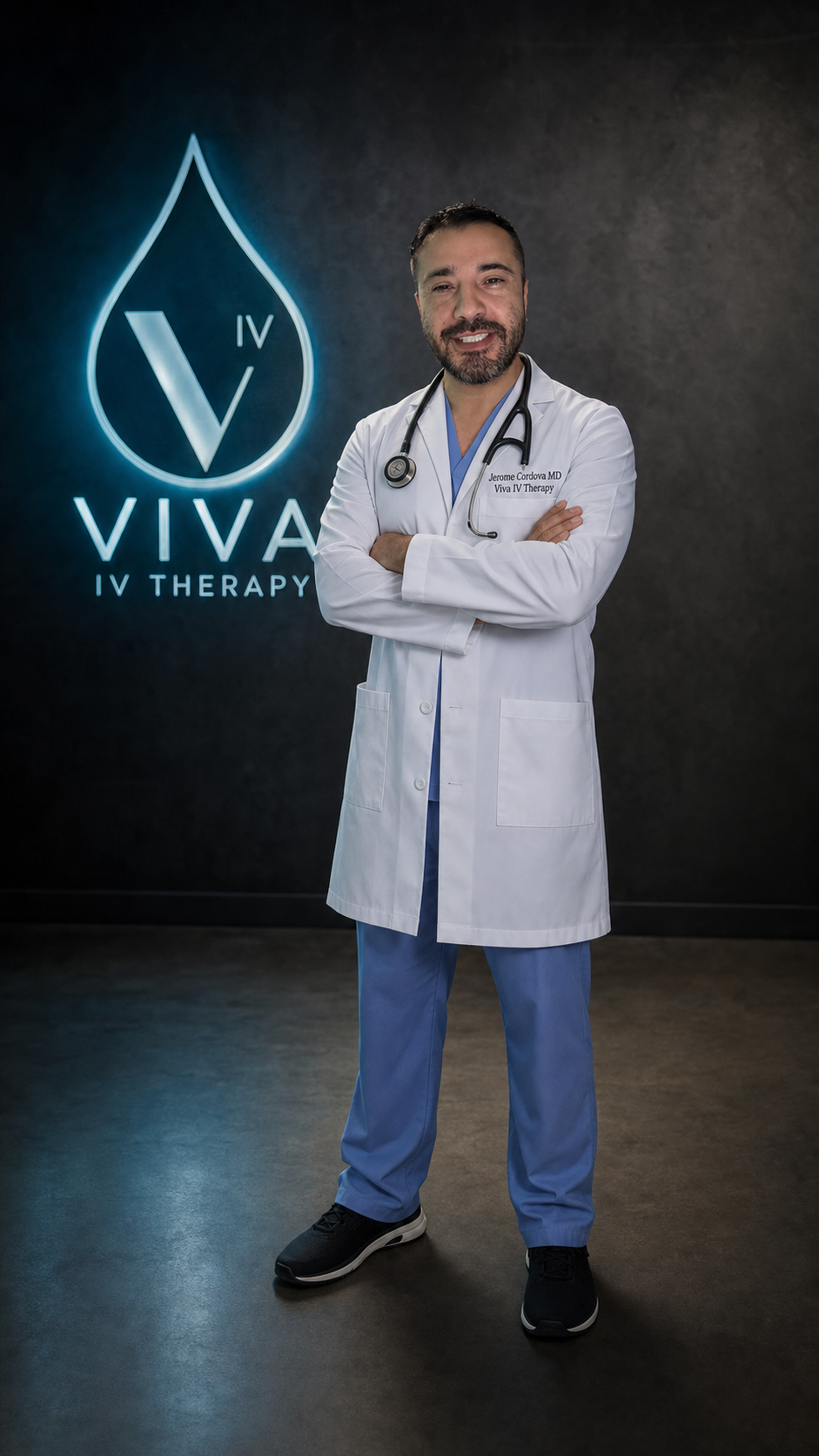
Dr. Jerome Cordova MD
Medical Director & Founder
Dr. Jerome Cordova, MD
Critical Care Physician · Biomedical Engineer · Founded Viva IV Therapy 2017 · Old Town Scottsdale

"Skin health is metabolic health made visible. In Scottsdale, where we have 300+ sunny days and UV indexes that are among the highest in the country, the oxidative stress on skin is relentless. IV glutathione and vitamin C give the body the antioxidant resources to counteract that damage from the inside — which is where it actually needs to be addressed."

Skin Health FAQ

Most patients notice a visible improvement in skin brightness and tone after 4–6 weekly glutathione sessions. The effects are cumulative — each session adds to the systemic glutathione level, which gradually shifts melanin production toward the lighter pathway. Hydration and texture improvements are often noticed sooner — sometimes after the first or second session.
IV glutathione has an excellent safety record when administered by qualified medical professionals. It is a naturally occurring tripeptide produced by your own body. The most commonly cited concern is nausea at very high doses, which our clinical protocols manage through appropriate dosing. All Viva IV treatments are physician-directed and administered by licensed RNs.
Absolutely — IV skin protocols and topical treatments are entirely complementary. IV addresses the internal drivers of skin aging (oxidative stress, collagen substrates, systemic inflammation); topicals address the surface barrier and local application of active ingredients. The best skin outcomes combine both approaches.
The brightening and antioxidant effects of glutathione are maintained with consistent treatment. Without ongoing sessions, systemic glutathione levels gradually return to baseline over weeks to months, and the visible effects fade proportionally. Monthly maintenance sessions after the initial loading phase sustain the results effectively.
Viva IV Therapy is a physician-owned and physician-directed medical clinic — not a med spa. Every IV treatment protocol is overseen by Dr. Jerome Cordova, MD, a critical care physician. Our glutathione and vitamin C dosing is based on clinical evidence, not marketing claims. We also address systemic contributors to skin health (hormones, nutrition, metabolic function) that purely aesthetic practices don't evaluate.

Also Explore

Ready for Glowing Skin from Within?

Walk-ins welcome daily. Start your skin protocol today.

(480) 508-8482

Open Daily · 10:00 AM – 7:00 PM · 7320 E. 6th Ave, Old Town Scottsdale